
The Gate of Truth
Fullmetal Alchemist, Gödel, and the limits of understanding
Equivalent exchange
Fullmetal Alchemist was my favorite anime growing up. It’s also part of why I got into materials science and engineering. The story follows the Elric brothers, Edward and Alphonse. In this world alchemy exists. It is a system of transformation: an alchemist can understand a material, break it apart, and rebuild it into something else. Everything follows one rule: equivalent exchange, meaning to gain something, something of equal value must be lost. The brothers believed that following this rule, they can create anything. Anything should be possible.
The Gate of Truth
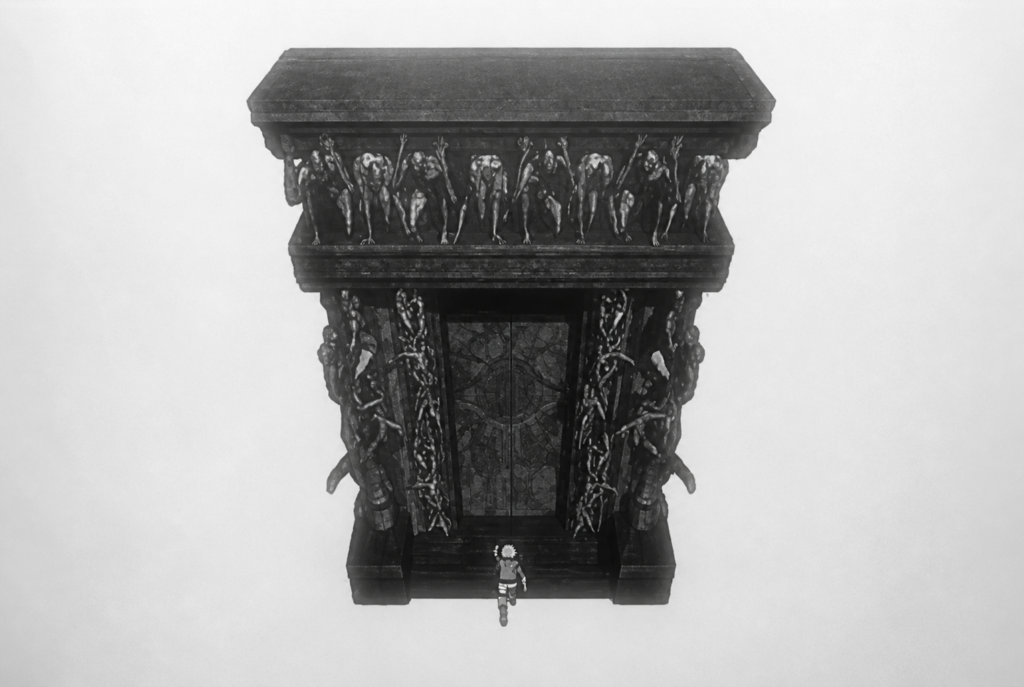
After their mother dies, the brothers tried to bring her back, thinking they can rebuild/fix everything. However the ritual fails badly. Edward loses his leg. Alphonse loses his entire body. And in that moment, they encounter something called: The Gate of Truth. As a kid, I never fully understood it. It felt symbolic and, honestly, vague. I told myself: “Eh.. probably just some anime logic.” It didn’t make much sense to me. The gate does one thing: equivalent exchange. It takes something from the alchemist and it gives something in return. Every time someone tries to go beyond their limits (for example, create life), they encounter this same gate. Again, it was confusing when I was a kid but, years later, I came to realize that the Gate of Truth is a boundary.
Gödel’s Incompleteness Theorem
In college, I ran into something that felt similar while I was prepping my discrete mathematics midterm in the library — *Gödel’s Incompleteness Theorem. In simple terms: Any system complex enough to describe itself will always contain truths it cannot prove.
So for example, imagine a perfect rulebook that can prove every true statement in the world(system). Then a statement appears inside it: “This statement cannot be proven by this rulebook.” The contradiction: if the rulebook proves it, it contradicts itself. If it cannot prove it, the statement is true, but unprovable, meaning this perfect rulebook can never exist.
Let’s look at a more intuitive example: We can use our eyes to see the world but we can never fully see our own eyes. Yes, we can see them through reflection, through mirrors, but never directly. We, in this system, can never fully see everything, so it is impossible to fully describe and define everything.
This concept struck me, and it reframed something I assumed. We tend to think intelligence means perfection: more knowledge, fewer mistakes, and stronger models or design. We tend to think intelligence means completeness. But Gödel suggests something else: A system cannot fully understand itself from the inside.
The boundary of knowledge
And suddenly, the alchemy story makes more sense to me. Rather than punishing the brothers, the Gate of Truth was simply revealing the boundary of knowledge. You can transform the world. But you cannot fully specify a human being. Because you are part of the system you’re trying to define.
In 2026, we’re all building AI that can reason, reflect, and even model themselves. Though, if they succeed, they won’t be perfect. They’ll inherit the same structure: self-awareness with limits. AI consciousness, if it exists, it may look like incompleteness, but, yeah, well-managed.
Intelligence is about operating despite blindspots exist. You cannot fully eliminate them. As a human, I can’t fully understand how I think. I can’t fully explain why I make certain decisions. Even when I try, I’m working with a version of myself, not the full thing. So, 100% clarity is not something you can eventually reach. The Gate of Truth shows Edward just enough, and then take something from him in return. Maybe intelligence doesn’t move us toward total understanding. Maybe it shows us where understanding ends. Maybe that is why people turn toward faith and religion. And maybe, even after all this, the point is still to keep going.
*Disclaimer* Gödel’s theorem is not literally about consciousness or AI. I’m using it as a framework: systems hit limits when they try to fully explain themselves from within.